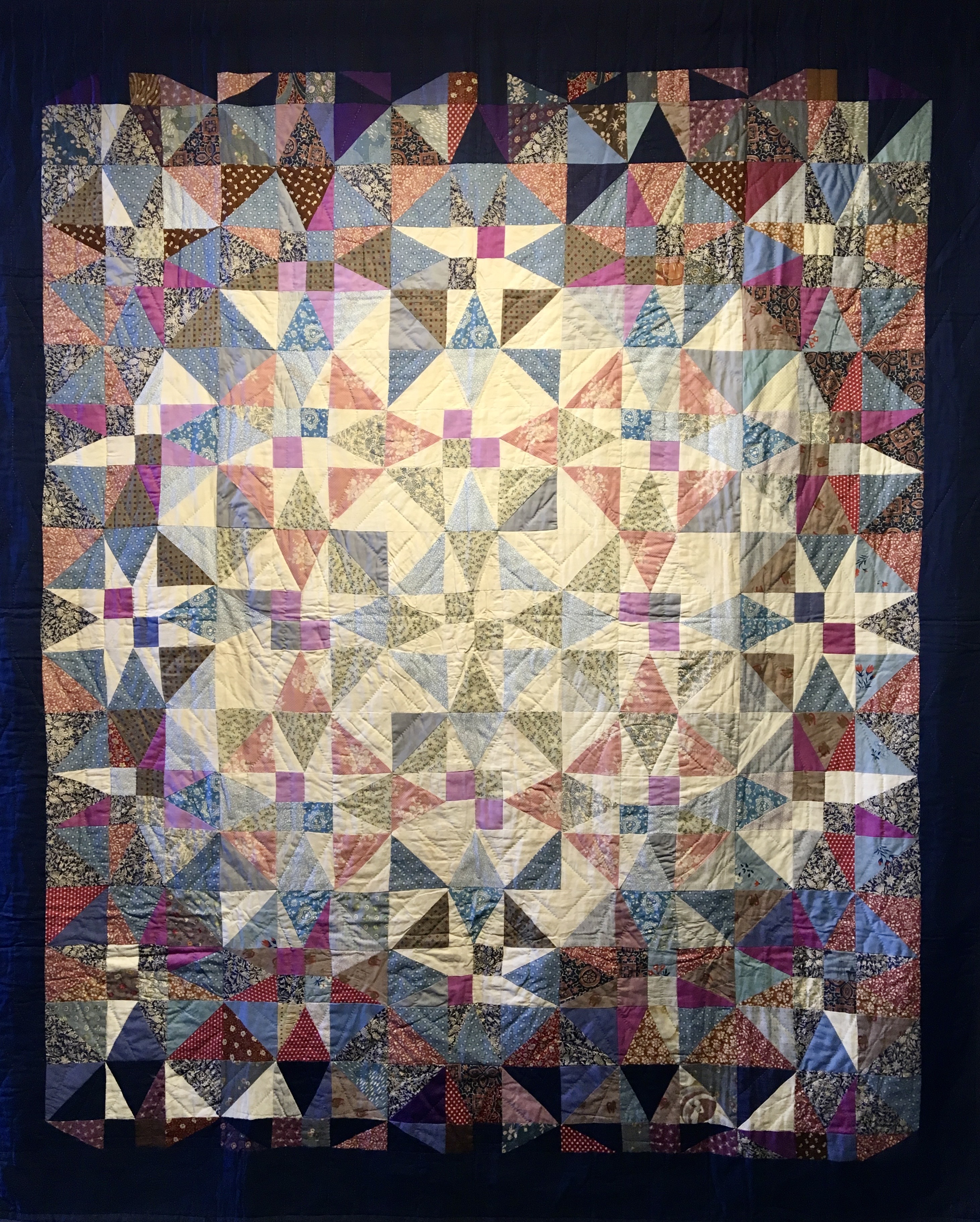
In 2018 Jeffrey Gutcheon’s quilt “Judy in Arabia” was exhibited at the New England Quilt Museum. His quilt caught my eye because of the use of color, from light in the center to dark at the edges and, also, the movement of the overall design. I discovered that Jeff had done all the drawings in his wife Beth’s book “The Perfect Patchwork Primer”. Jeff and Beth went on to write a second book together, “The Quilt Design Workbook”. This quilt and the block “Judy in Arabia” are included in that book. These are vintage 1970’s books and Jeff’s quilt was made in the midn1970’s.
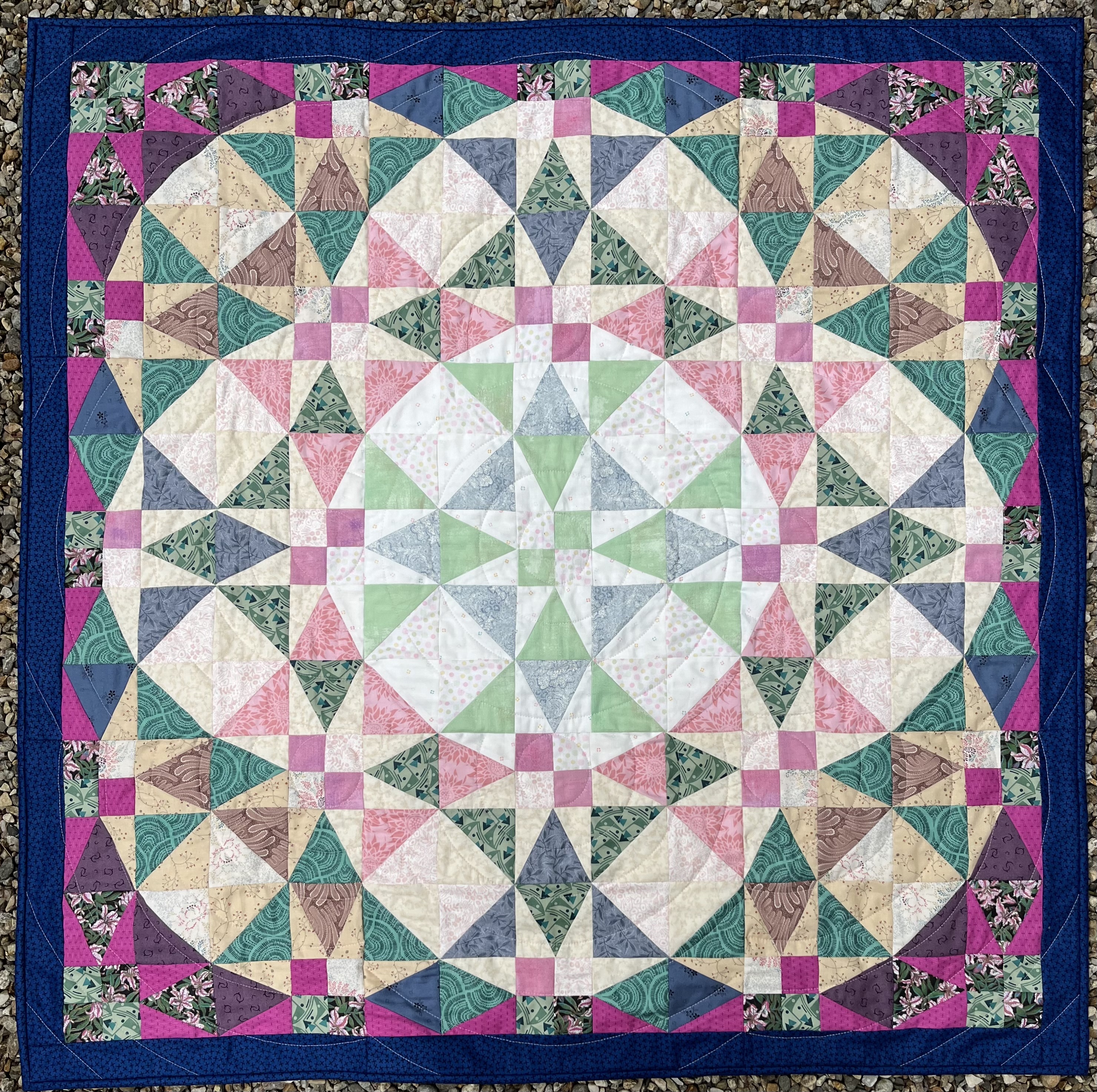
I chose to study Jeff’s quilt when I was given an opportunity to participate in the American Quilt Study Group 2025 Quilt Study. My quilt was exhibited at their Study Seminar in Portland, Maine, and although it was not chosen for their touring exhibit, it is included in the book documenting the study. My quilt is 42” x 42”. Jeff’s quilt is 72” x 84”.
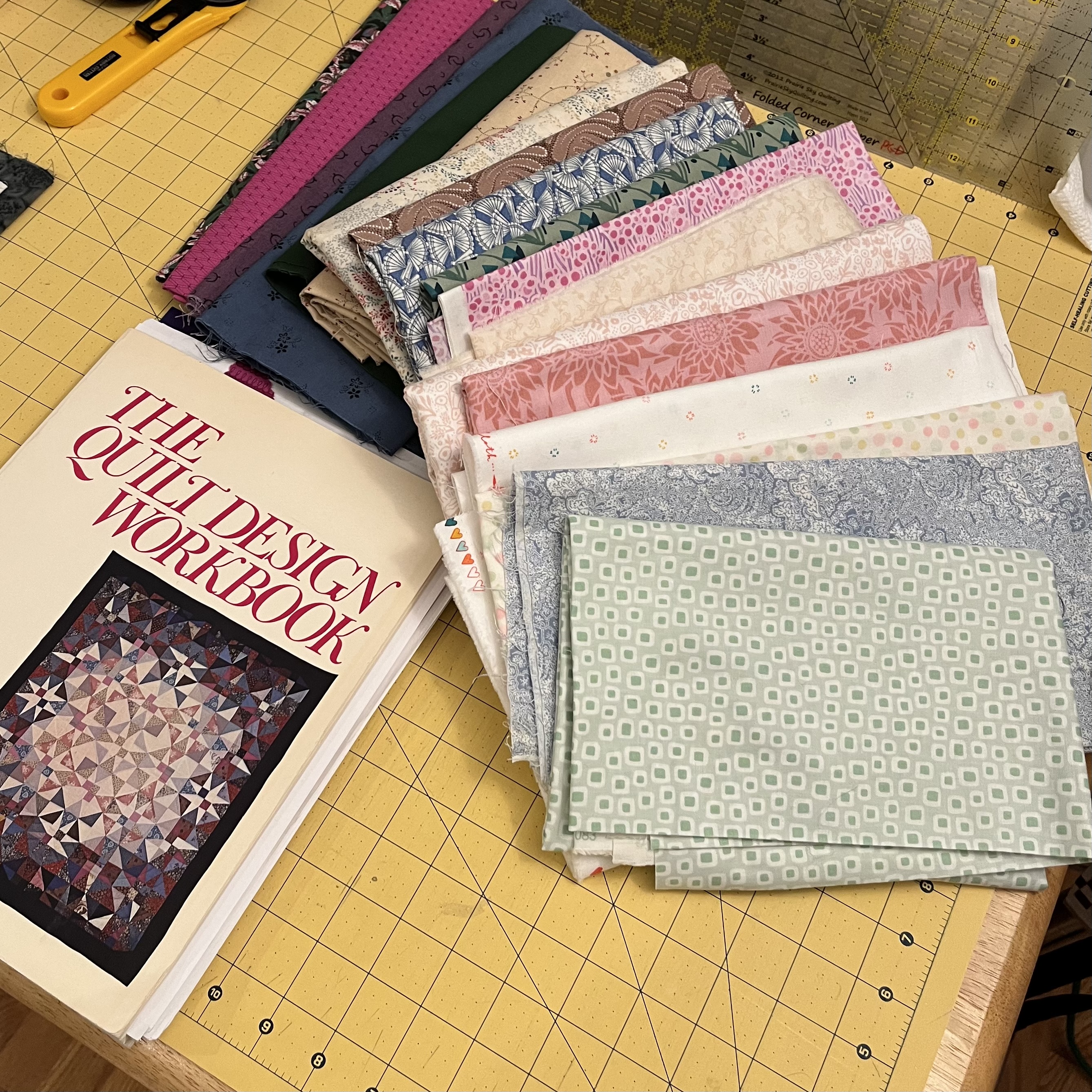
I took advantage of Electric Quilt to design my quilt. The block Judy in Arabia is in Barbara Brackman’s Encyclopedia of Pieced Quilt Patterns, and I have that add on, BlockBase+, in my EQ8 software.

My process involved studying Jeff’s quilt and then finding fabrics to get the right values from light to dark with an overall vibrant look. I ended up redoing the center of the quilt, because I did not think the green fabric was dramatic enough



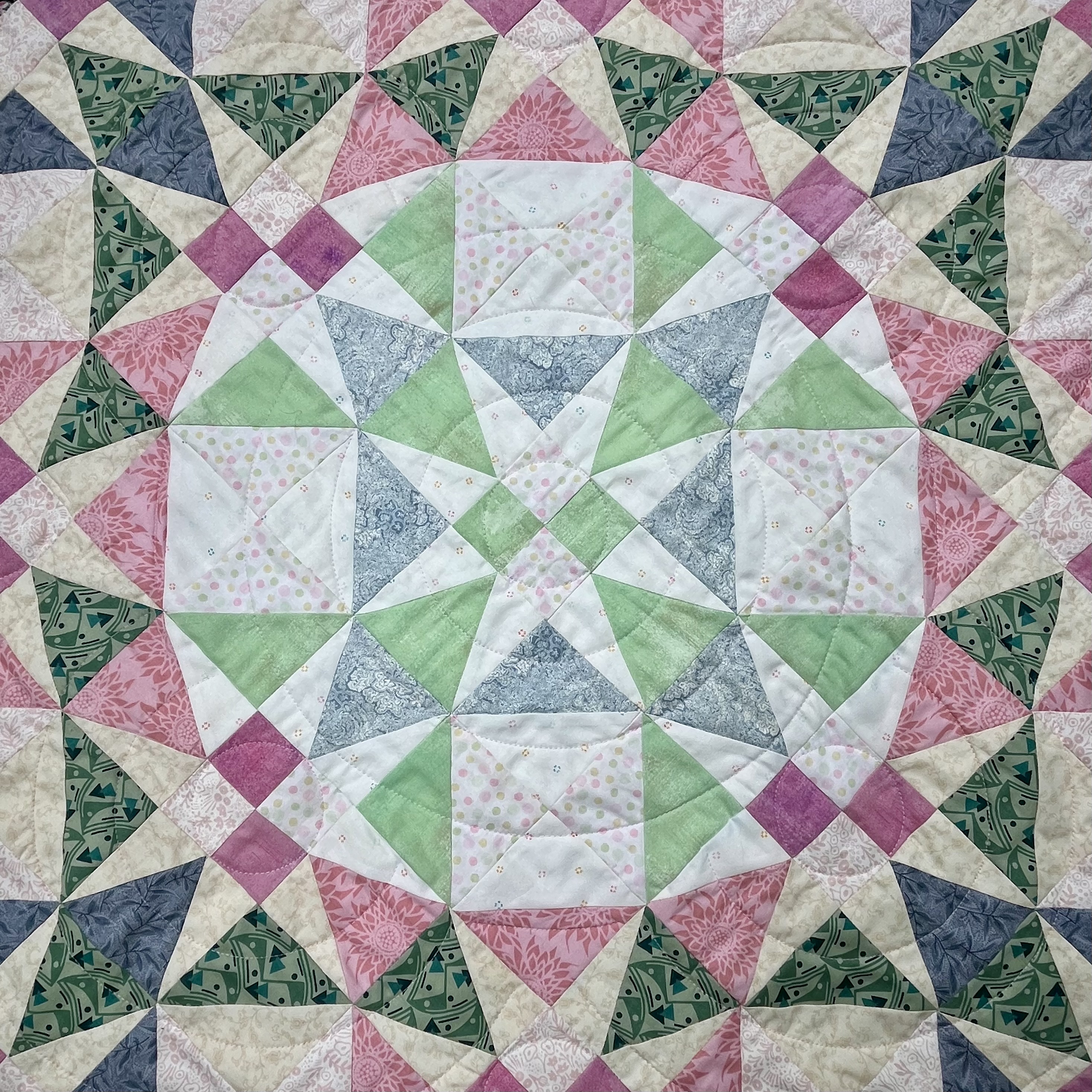

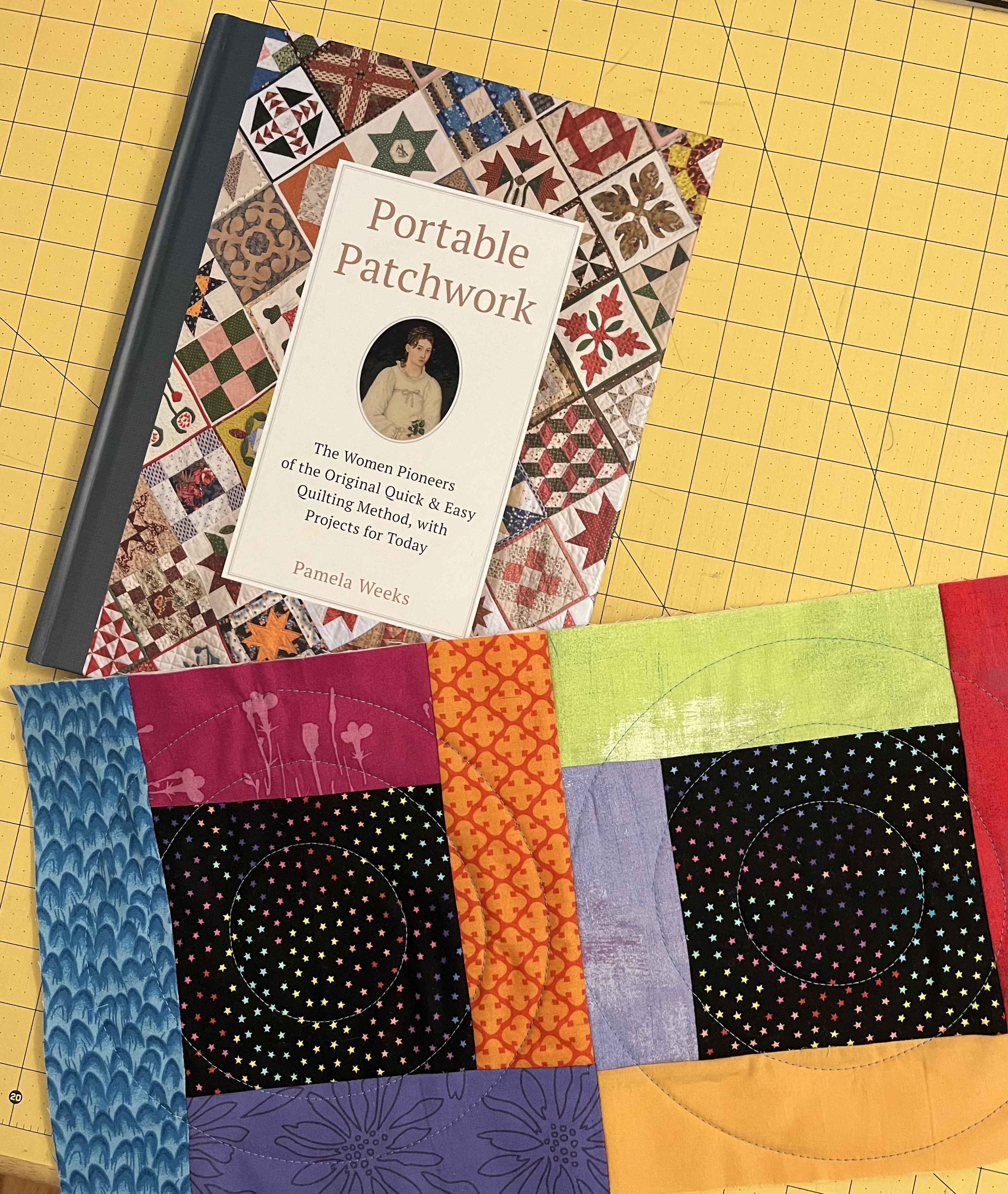
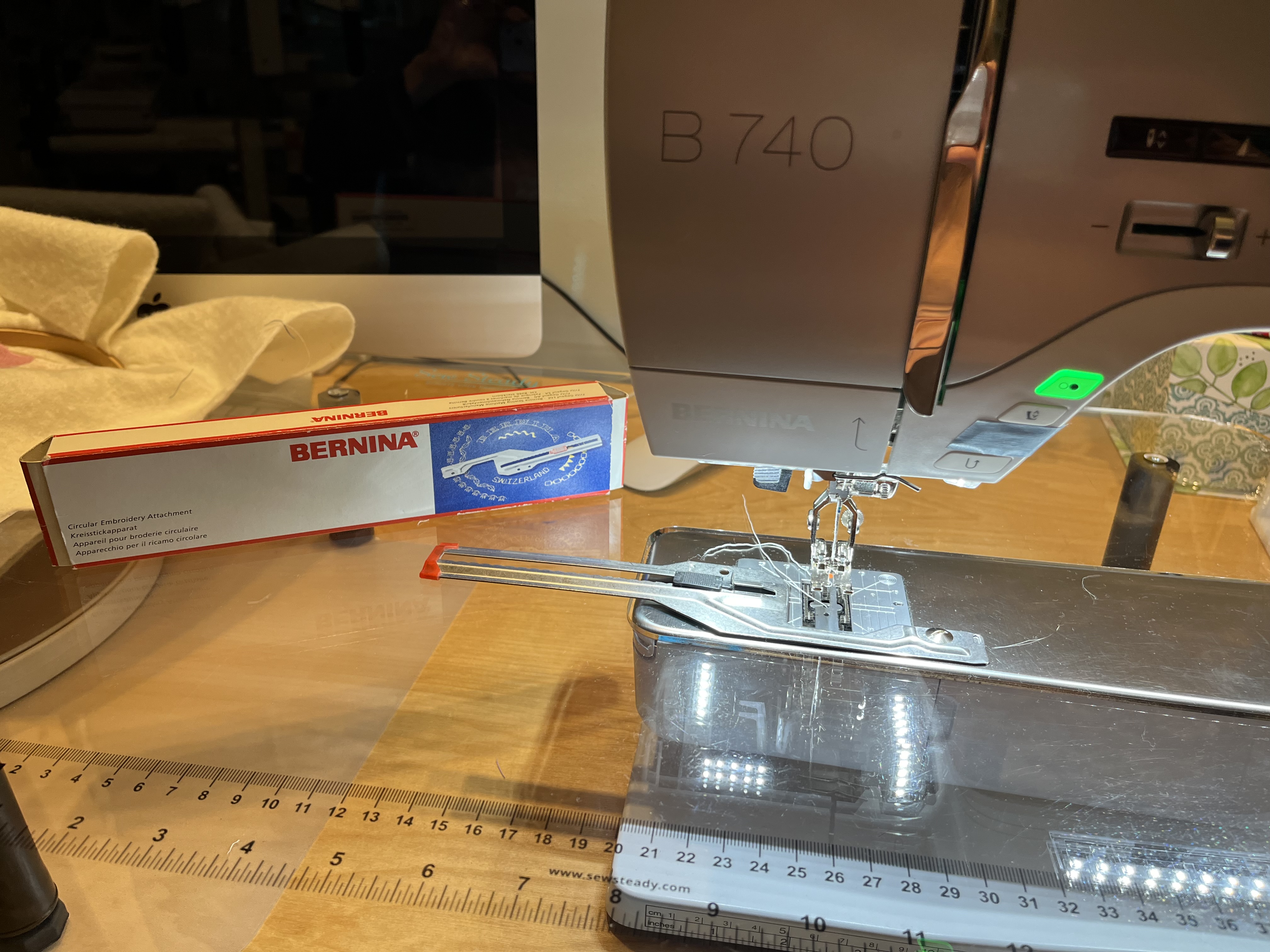
To finish my quilt I decided to use a style of quilting typically seen in quilts made in the 1970s. Quilting was much less dense and often done on a domestic sewing machine, if not by hand. I decided to use my BERNINA 740 with the circular sewing attachment. Once I made my first circle with the attachment I then traced that to fill the block. I also decided to use a quilt as you go, or potholder, quilting technique. This made it much easier to manage the quilting on my domestic machine and I was able to achieve perfect circles.
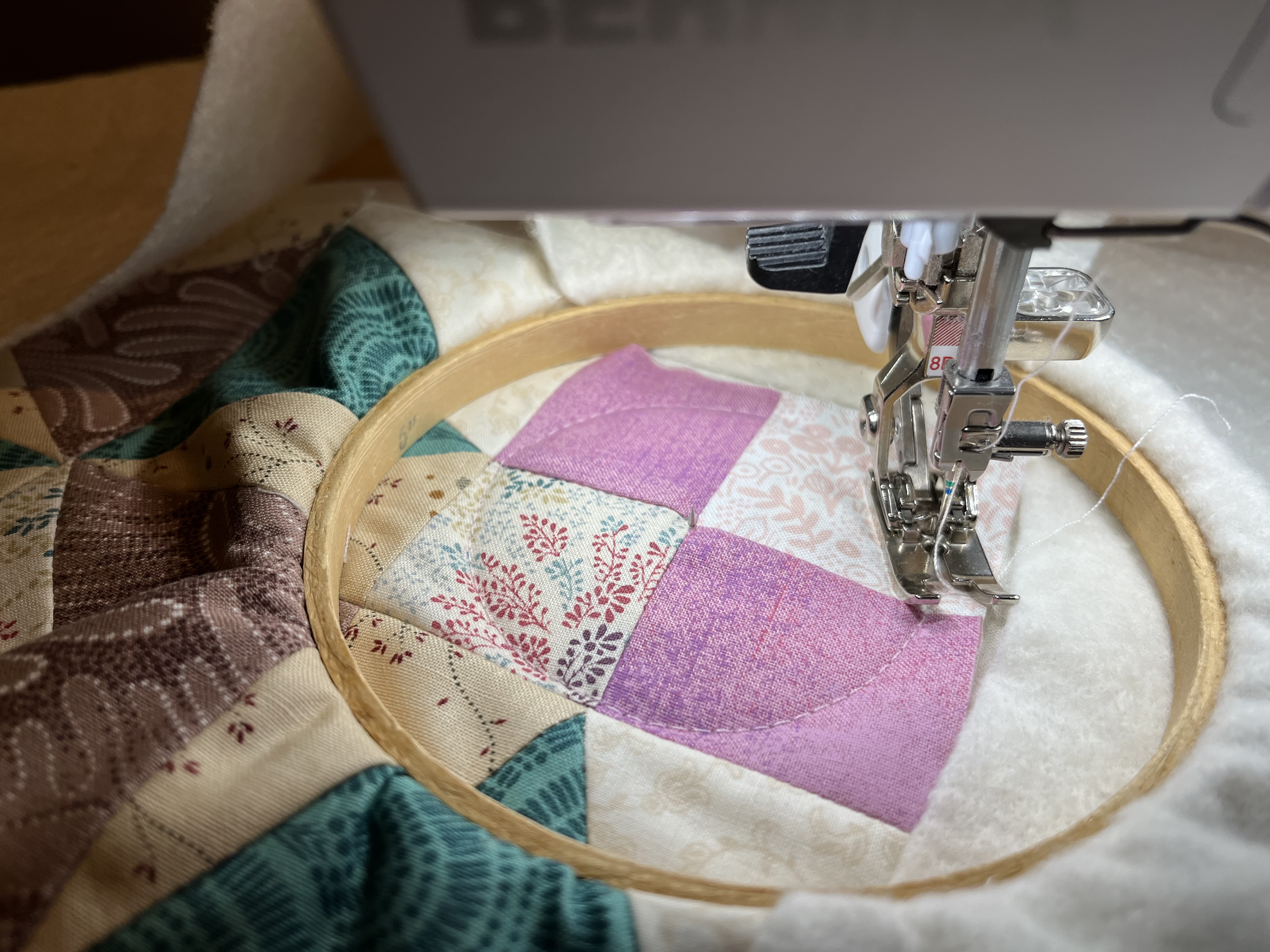


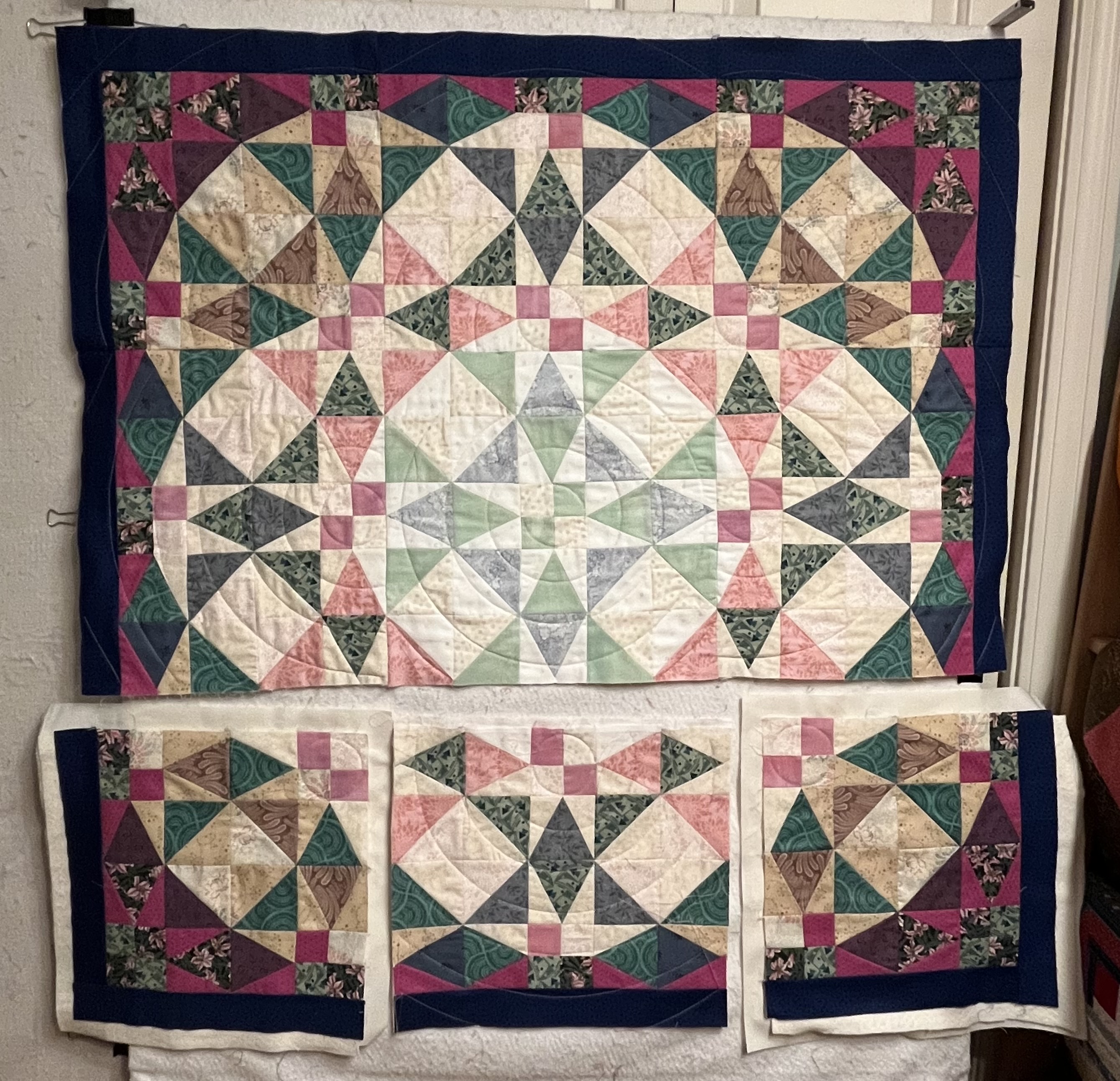
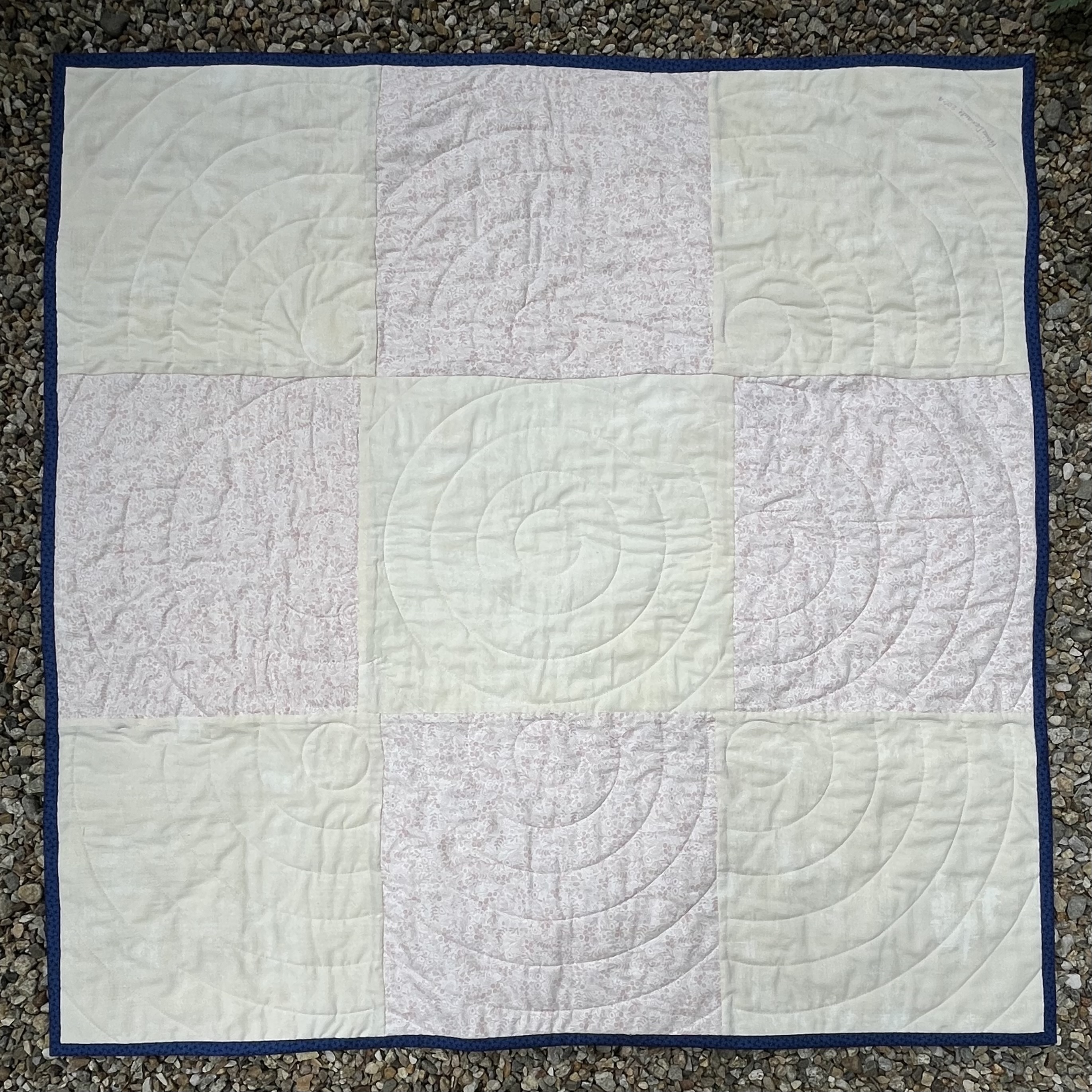
You can read more about Quilt as You Go techniques and the history of this type of quilting in Pam Week’s book Portable Patchwork.